Making innovation and entrepreneurship work for urban communities.
The Urban Entrepreneurship Initiative focuses on applying innovation and entrepreneurship to improve the quality of life in urban communities.
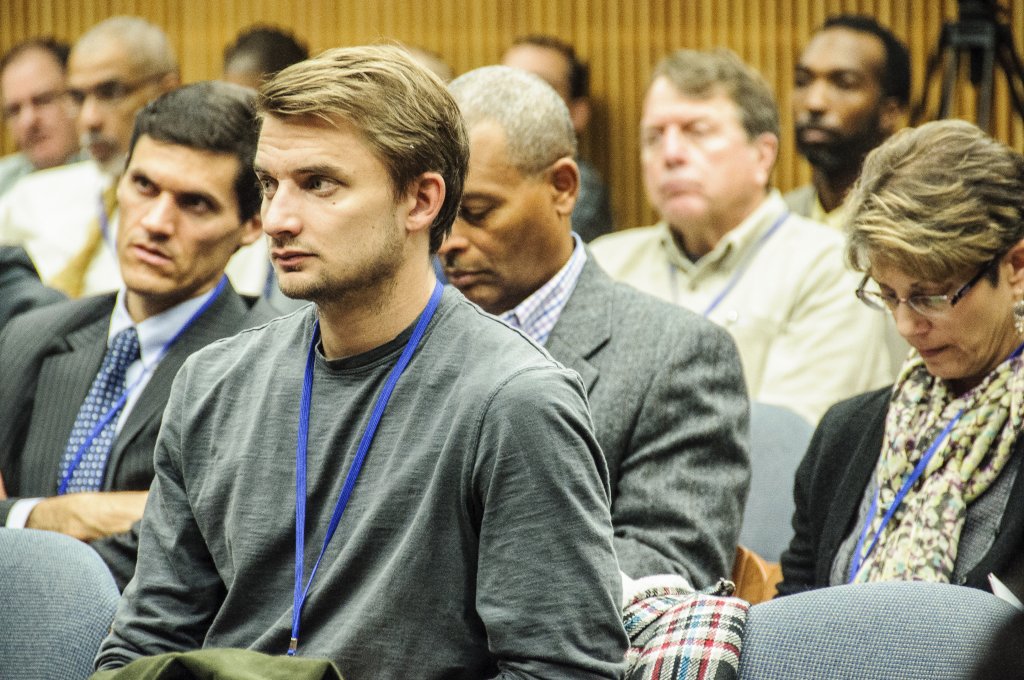
A matter of equity…and common sense.
Each year, investors spend many billions of dollars on new business ventures and projects. Governments and philanthropies spend billions more on business development and workforce training. How much of that investment is focused specifically on solving the most important challenges facing urban communities? “Changing the game” in urban communities requires that we prioritize solving the most important problems that urban inhabitants face.
Entrepreneurship has always been about solving problems. An entrepreneur creates a business to solve a problem and, if successful, reaps the financial reward. UEI seeks to make entrepreneurs fully aware of the tremendous opportunities available to urban-focused business ventures, and to provide the tools to facilitate their success. The ultimate aim is to help innovation and entrepreneurship professionals achieve the “holy grail:” to do well by doing good.
Why UEI…and why now?
The world is mostly urban…

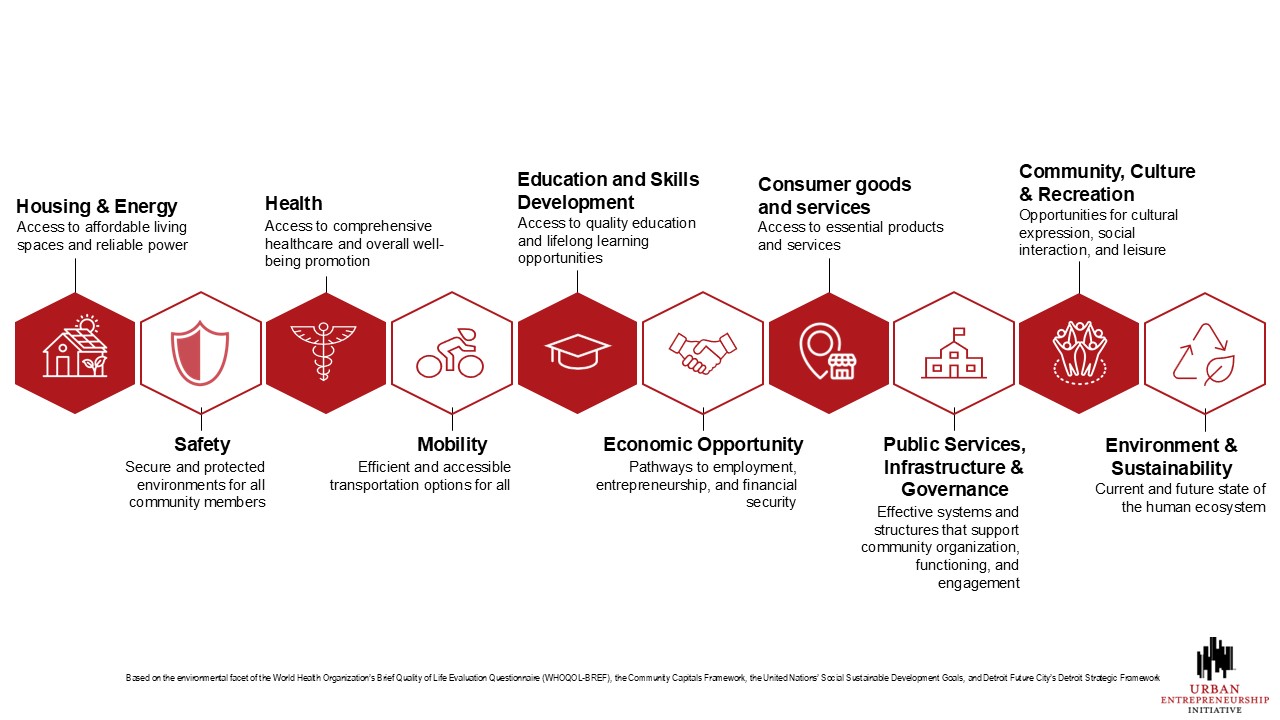
More than half the world’s people live in an urban community. That proportion is projected to grow to 70% by the year 2050. In the United States, more than 80% of the population are urban dwellers. People are drawn to urban communities because they can be vibrant, exciting, and highly productive places that perform well with respect to the community vitality categories shown below.
…but urban communities are far from perfect.

Despite the benefits of urban communities, difficulties and disruption can occur in any of the above community vitality categories in different places and at different times. As a result, the needs of many urban residents are often unmet, and the potential for problems is on the rise due to three principal causes:
- rapidly advancing technology
- cultural, ethnic and class conflict
- environmental and health crises
Prime examples of technology-driven disruption include social media applications, AI chatbots, and electric vehicles. Examples of cultural and ethnic conflict include battles over immigration policies and abortion laws. Prime examples of environment and health-related disruption include climate change and the Covid-19 pandemic. Urban communities face challenges all the time. Successful communities adapt, heal, and move forward. Unsuccessful communities spiral downward. The community dynamism created by urban-focused entrepreneurs can be the difference.
Entrepreneurial professionals can develop needed solutions…
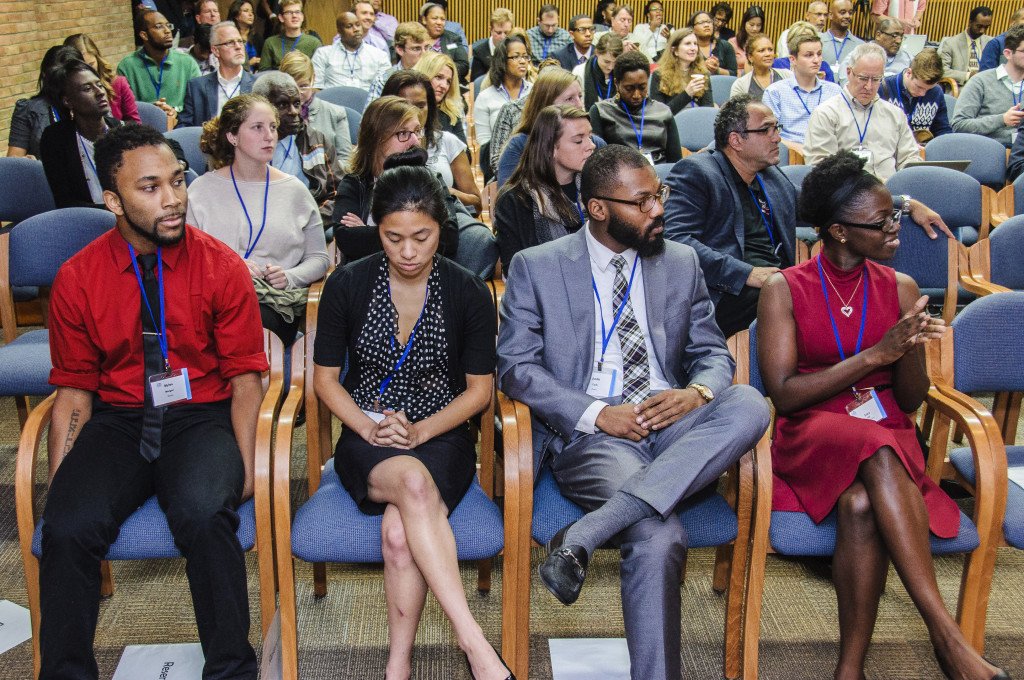
Entrepreneurial-minded professionals in private industry, community organizations, and government can create solutions that address the threats and disruptions facing urban communities. They respond to challenges with innovative business models, new technology, and creative energy. They employ community residents and drive economic growth. They inspire entrepreneurial thinking and drive entrepreneurial culture in all segments of a community.
…but effective urban innovators are in short supply.

Designing entrepreneurial solutions to address the needs of urban communities requires special expertise. It requires talent in community engagement, human centered design, business modeling, customer development processes, and business management. People with the necessary expertise are often in short supply, because:
- People who possess needed skills and technology are often not aware of the opportunities or are not motivated to address urban community needs.
- Community members and others who are inclined or already working to address urban community needs often lack needed funding or technology.
- Capable and motivated people may lack familiarity with urban-focused business models, urban business development practices, or the urban business landscape.
- Otherwise talented innovators may lack the ability to understand an urban community’s unique culture and empathize with its people.
Failure is not an option. We envision success!
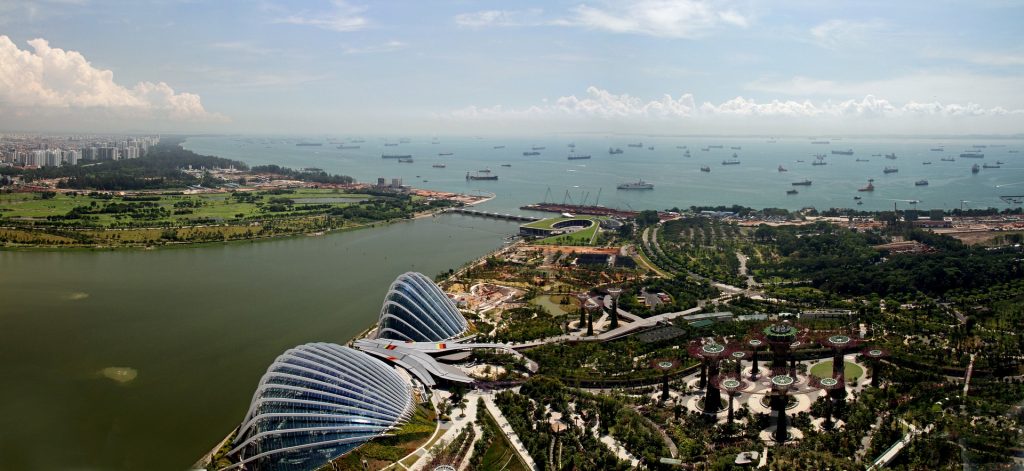
The UEI vision:
- A cadre of strong urban-focused businesses, large and small, armed with the techniques and resources to identify and solve problems and create the cities of the future!
- Well-prepared urban innovators who solve problems, add dynamism to the community, and foster an entrepreneurial civic culture.
- Technological innovation that is harnessed to benefit, rather than disadvantage, people in urban communities.
- Urban community constituencies that benefit equitably from entrepreneurial problem-solving activities.
- An investor network that is ready, willing, and able to fund urban-focused businesses.
We achieve our vision by empowering urban innovators with useful information and essential connections.
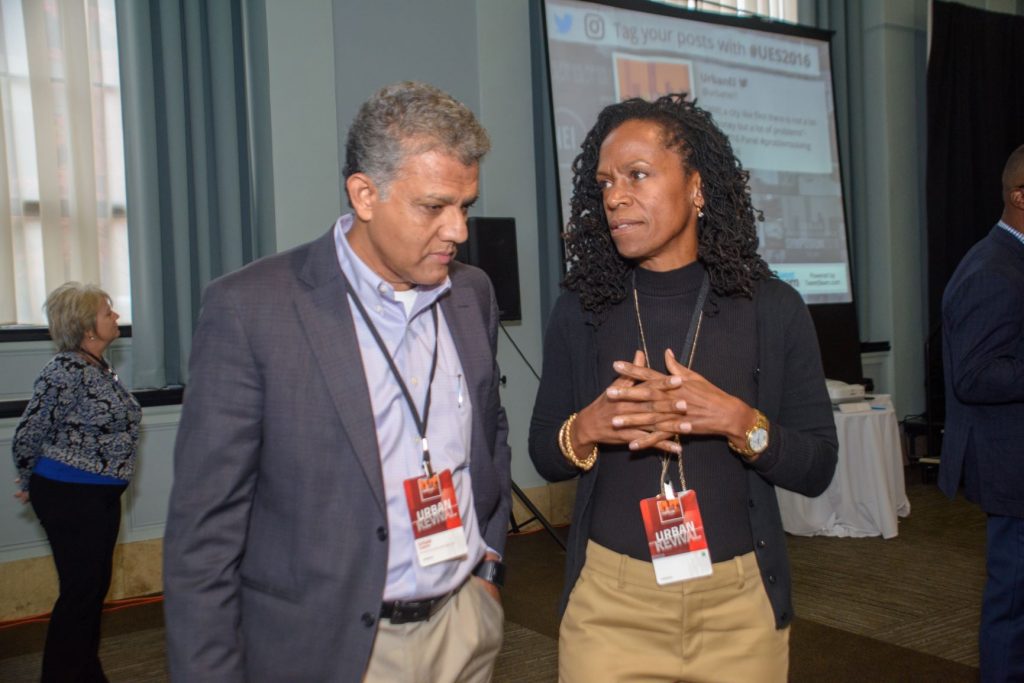
Our mission at Urban Entrepreneurship Initiative is to empower entrepreneurs to provide sustainable, scalable, business-oriented solutions that address the needs of urban communities. We welcome as UEI members not only entrepreneurs engaged in startup ventures, but also entrepreneurial-minded professionals who work in established businesses, community service, and government. We serve our members in the following ways:
- A robust online platform that connects and supports the UEI member community.
- A database that includes urban-focused business models, key urban community needs, existing business profiles, articles, and other essential information.
- Seminars and courses that address urban entrepreneurship methods and best practices.
- Events and media programming to share information, discuss important topics, make connections, and recognize significant achievements.
- Connections for UEI members to advice and resources.
The Urban Entrepreneurship Initiative provides unique, tangible benefits to urban communities.
The entrepreneurs who are UEI members will achieve greater impact and will experience more rewarding, satisfying careers. The companies UEI members work for will achieve greater financial success while being seen as a positive force in the community. The urban communities the entrepreneurs and companies serve will be more livable, productive, equitable, and resilient.